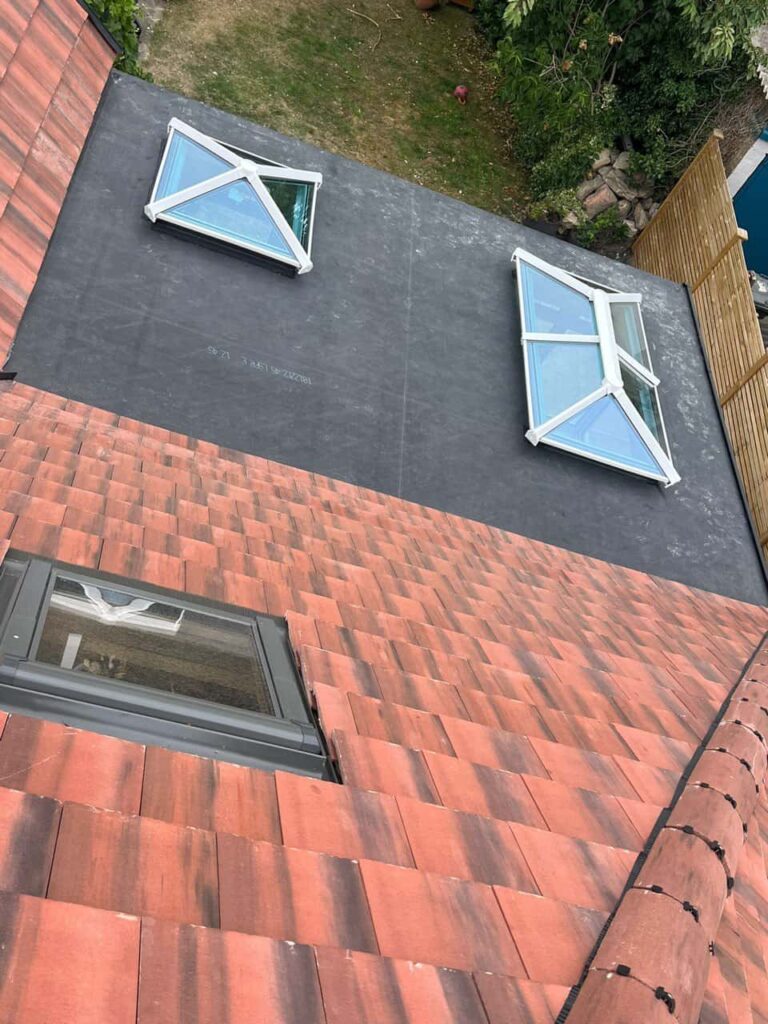
Leadwork protects some of the most vulnerable parts of a roof. It is commonly installed around chimneys, adjoining walls, valleys and other junctions where tiles or slates alone cannot provide a continuous barrier against rain.
When lead flashing becomes split, loose or incorrectly positioned, water can enter beneath the roof covering and travel into the property. Professional leadwork repairs restore these important junctions and help the complete roofing system direct water away effectively.
For property owners in Cannock, West Midlands, dealing with deteriorated leadwork promptly can prevent a localised defect from affecting the surrounding tiles, underlay and roof structure.
Why Sound Leadwork Is Essential for a Weatherproof Roof
Leadwork Protects Vulnerable Roof Junctions
Most roof coverings perform well across broad, uninterrupted slopes. Greater protection is required where the roof meets another surface or changes direction.
Leadwork may be used around:
- Chimney stacks
- Roof-to-wall abutments
- Valleys
- Dormer structures
- Roof windows
- Parapets
- Service penetrations
- Changes between different roof sections
These locations receive concentrated water flow and are particularly exposed to wind-driven rain. Correctly formed leadwork creates a flexible, weather-resistant connection between adjoining materials.
Damaged Flashing Can Create a Direct Route for Water
A small split or lifted edge can allow rainwater to pass behind the flashing. Once beneath the visible roof covering, moisture may travel along underlay, battens or structural timbers before becoming noticeable indoors.
The resulting damp patch may therefore appear some distance from the original defect. Professional inspection is important because sealing the area directly above an internal stain may not address the true entry point.
Professional Repairs Restore the Correct Water Path
Leadwork is shaped and positioned so that water flows over its surface and back onto the roof covering. Incorrect overlaps, poorly formed corners or gaps at junctions can interrupt this route.
A professional roofer assesses how water reaches and leaves the affected area before completing the repair. Restoring the correct falls and overlaps helps prevent moisture from being directed behind tiles, into masonry joints or beneath adjacent roofing materials.
Lead Must Be Able to Move Naturally
Lead expands and contracts as temperatures change. If a section is too long, rigidly fixed or incorrectly detailed, natural movement can cause buckling, splitting and fatigue.
Professional leadwork installation allows for controlled movement while keeping the material securely positioned. The size of each section, fixing method and joint arrangement must suit its location. Simply covering a split without correcting the cause may result in the damage returning.
Chimney Flashing Requires Careful Detailing
The junction between a chimney and pitched roof is exposed to water flowing down the roof slope as well as rain striking the chimney itself. Several pieces of leadwork may be needed to protect the sides, front and rear of the stack.
A complete inspection should consider:
- Step flashing along the sides
- Cover flashing secured into the masonry
- The apron at the lower edge
- The back gutter behind the chimney
- Corners, overlaps and mortar joints
- The condition of nearby tiles and underlay
Repairing only the most visible section may leave another part of the junction vulnerable.
Secure Fixing Prevents Lead From Lifting
Strong winds and repeated weather exposure can loosen inadequately secured leadwork. Lifted edges allow wind-driven rain to reach the materials beneath and may place further strain on neighbouring sections.
Professional repairs use suitable fixing techniques that hold the lead in place while still allowing necessary thermal movement. The surrounding masonry or roofing material should also be checked to ensure that it can support the repaired detail.
Correct Overlaps Improve Resistance to Wind-Driven Rain
Lead sheets and flashing sections need sufficient overlap to prevent water from passing between them. Overlaps that are too short, badly aligned or positioned against the direction of water flow can become weak points.
A roofer can determine whether the existing detail should be adjusted, partially renewed or replaced. Properly formed joints provide a more reliable barrier than surface sealants applied over an unsuitable arrangement.
Surrounding Roof Materials Should Be Inspected
Water entering through defective leadwork may affect more than the lead itself. Nearby tiles, slates, battens, underlay and accessible timbers can all be exposed to moisture.
A professional repair should therefore include an assessment of the surrounding area. Damaged components can be addressed before the leadwork is reinstated, preventing deterioration from being concealed beneath the completed repair.
Temporary Patches May Not Provide a Lasting Solution
Surface coatings and sealants may offer short-term protection in certain circumstances, but they do not correct poor detailing, failed fixings or movement-related splits.
Repeated patching can also make it harder to assess the underlying condition. Where the lead has become badly fatigued or incorrectly installed, carefully replacing the affected section may provide a more dependable result.
Signs That Leadwork Needs Professional Attention
Leadwork should be inspected if you notice:
- Splits or visible holes
- Lifted or curled edges
- Buckled sections
- Loose flashing around a chimney
- Gaps where lead enters masonry
- Water staining near a roof junction
- Damp appearing after wind-driven rain
- Previous patches beginning to separate
- Cracked mortar around flashing details
These signs do not always mean that all the leadwork requires replacement. A close assessment can establish whether a targeted repair is sufficient.
Why Accurate Diagnosis Matters
A leak near a chimney or wall junction may be caused by leadwork, but damaged tiles, deteriorated mortar or defective underlay can produce similar symptoms.
A professional roofer examines how the junction is constructed and traces the likely route of the water. This ensures that the work addresses the real source of ingress rather than only the most obvious surface defect.
Conclusion
Professional leadwork repairs improve roof weatherproofing by restoring secure junctions, correct overlaps and effective water flow. They also allow natural thermal movement while protecting the surrounding roof materials from moisture.
The most reliable repair begins with identifying why the leadwork failed and assessing the complete junction. If you have noticed damaged flashing or signs of water ingress at your property in Cannock, West Midlands, contact Cannock Roofing Repairs to arrange a professional inspection and receive clear advice on the appropriate work.
Call us on: 01543 220 998
Click here to find out more about Cannock Roofing Repairs
Click here to complete our contact form and see how we can help with your roofing needs.