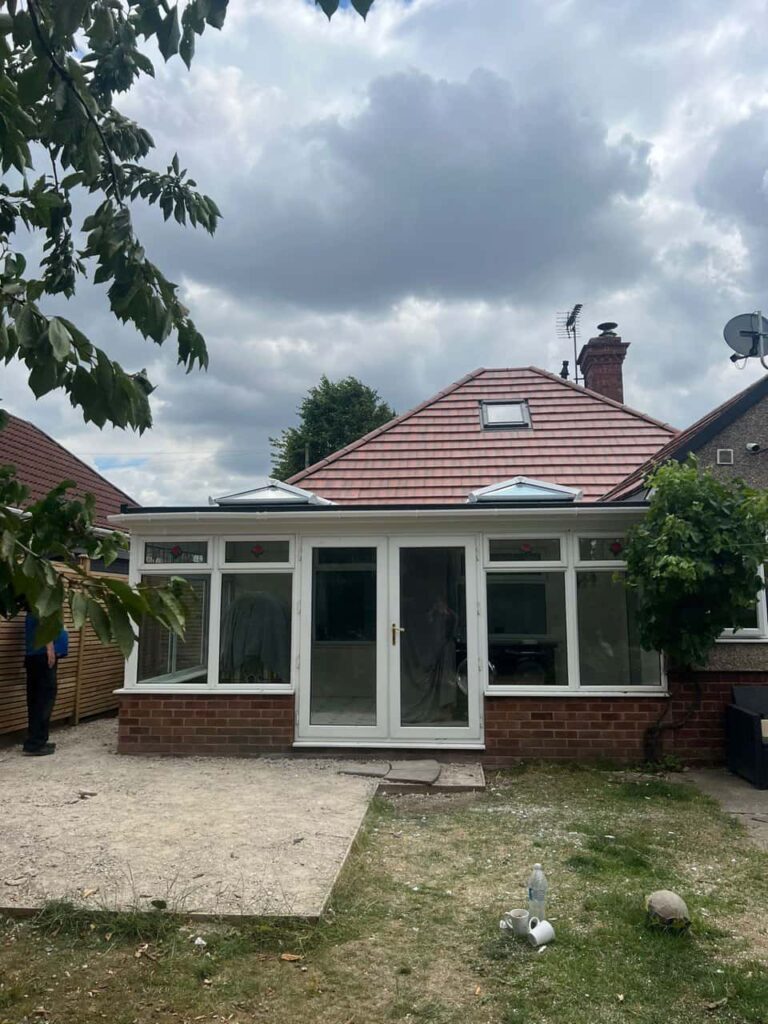
Leadwork performs an important weatherproofing role on many roofs. It is commonly installed around vulnerable areas where tiles or other roof coverings alone cannot provide the necessary protection against rainfall. When leadwork begins to crack, lift, split or become distorted, it can therefore be an early warning that one of these important junctions is no longer performing as intended.
For homeowners in Cannock, West Midlands, damaged leadwork is worth investigating before obvious water ingress develops. In many cases, timely leadwork repairs can restore the affected area and help prevent moisture from reaching surrounding roofing materials. The important step is identifying why the lead has deteriorated and whether any related damage has already occurred.
What Is Roof Leadwork Used For?
A roof contains numerous junctions where different materials, surfaces and structures meet. These areas need careful weatherproofing because they can otherwise provide opportunities for rainfall to enter.
Lead is widely used because it can be formed around these vulnerable details while providing durable protection when correctly installed.
Depending on the roof design, leadwork may be found around:
- Chimneys
- Roof-to-wall junctions
- Valleys
- Changes in roof level
- Certain roof penetrations
- Other vulnerable intersections within the roofing system
Although lead is durable, it is not immune to deterioration or movement.
What Does Cracked Leadwork Look Like?
Cracking can range from a small split to more obvious separation within a section of lead.
Small cracks are particularly easy to underestimate because the surrounding roof may still appear completely normal. However, even a relatively narrow opening can compromise the weather-resistant detail.
Rain does not require a large opening to penetrate a roof.
If water repeatedly reaches the same weakness, moisture can potentially travel beneath surrounding coverings and into areas that are difficult to see from outside.
Why Does Leadwork Become Distorted?
Lead naturally responds to changes in temperature by expanding and contracting.
Correct installation allows for this movement. Problems can develop where the lead is unable to move appropriately or where an existing installation has deteriorated over time.
Distorted leadwork may appear:
- Buckled
- Raised
- Rippled
- Pulled away from adjoining materials
- Uneven around joints
- Split around stressed areas
Distortion does not always mean that water is already entering the property, but it can indicate that the leadwork deserves professional assessment.
Can Damaged Leadwork Cause Roof Leaks?
Yes. One of the main concerns with cracked or displaced leadwork is the potential for water ingress.
Leadwork is often positioned exactly where the roof needs additional weather protection. If that protection becomes compromised, rainfall may reach beneath tiles or other materials.
Leaks caused by leadwork can also be difficult to diagnose because water may travel before becoming visible internally.
A damp patch inside the property may therefore appear some distance from the actual exterior defect.
This is why identifying the entry point is more useful than simply responding to the location of internal staining.
Why Leadwork Around Chimneys Deserves Attention
The junction between a chimney and the surrounding roof covering requires effective weatherproofing.
Lead flashing is commonly used to help prevent rainfall from entering around these transitions.
If the lead begins pulling away, cracking or losing its correct position, gaps can form around a particularly exposed section of the roof.
Problems around chimney leadwork may become more noticeable during heavy or wind-driven rain, when water is more likely to find weaknesses around junctions.
Professional inspection can determine whether the lead itself requires repair and whether the surrounding roof covering has also been affected.
Small Cracks Can Become Larger Problems
One reason to address damaged leadwork early is that deterioration rarely benefits from continued exposure.
A small split may remain relatively localised initially. However, repeated movement and weathering can cause the affected area to deteriorate further.
Meanwhile, if water is entering through the defect, surrounding roofing materials can also become affected.
This can turn what began as a focused leadwork repair into a wider roofing problem.
Early assessment helps determine the extent of the defect while it may still be confined to a manageable area.
What Does Leadwork Pulling Away From the Roof Mean?
Leadwork should form an effective detail with the surfaces it is designed to protect.
Where sections have noticeably lifted or pulled away, the intended weatherproofing arrangement may have become compromised.
The cause needs to be established rather than simply pushing the lead back into position.
Movement may relate to deterioration, installation issues, weather exposure or stresses within the existing leadwork. Without addressing the underlying reason, the same problem may return.
Could Nearby Tiles Also Be Affected?
Damaged leadwork and tile problems can sometimes occur within the same area.
For example, movement around a junction may coincide with cracked, displaced or deteriorated tiles nearby.
This is why professional leadwork repair should include consideration of the surrounding roof rather than concentrating exclusively on the visible lead.
If neighbouring materials remain sound, the repair can potentially stay focused on the leadwork. If further deterioration is discovered, those issues can be addressed as part of the appropriate roofing work.
Why You Should Not Wait for an Internal Leak
A visible leak is not the ideal signal for deciding when roof repairs are necessary.
By the time water marks appear on a ceiling or wall, moisture has already travelled beyond the outer roofing system.
If cracked, split or distorted leadwork can be seen beforehand, it makes sense to investigate the defect at that stage.
Early attention can help restore the roof’s weather protection before repeated rainfall has the opportunity to affect additional areas.
Recurring Leaks May Point to Leadwork Problems
If a leak repeatedly returns around the same general part of the roof, leadwork and nearby junctions may deserve closer examination.
Repeated repairs to tiles will not solve a problem if the actual entry point is damaged flashing.
Similarly, treating internal staining does nothing to stop rainfall entering from outside.
Recurring roof leaks should therefore be investigated methodically.
The objective is to establish:
- Where water is entering.
- Why the weatherproofing has failed.
- Whether surrounding materials remain sound.
- What repair will properly restore the affected section.
This diagnostic approach is particularly important around complex roof junctions.
Can Leadwork Be Repaired Without Replacing the Roof?
In many cases, yes.
Cracked or distorted leadwork does not automatically mean that a roof requires complete replacement.
Where deterioration is localised and the surrounding roofing system remains in good condition, targeted leadwork repairs may be sufficient.
The appropriate solution depends on the extent and cause of the damage.
This is why homeowners should avoid assuming either extreme: that a small lead defect can always be ignored, or that any damaged flashing means extensive roof renewal is required.
A professional inspection provides a much clearer basis for deciding what work is genuinely necessary.
When Could Wider Roofing Work Be Needed?
More extensive work may be appropriate where leadwork damage forms part of broader roof deterioration.
For example, further investigation may be required when:
- Several leadwork areas are failing
- Surrounding tiles are also deteriorating
- Water ingress has become persistent
- Numerous roof junctions require attention
- Previous repairs are repeatedly developing problems
- The roof has widespread defects in different locations
In these situations, repairing one visible crack may not address the complete problem.
The roof should be considered as a whole to establish whether targeted repairs remain appropriate.
Why DIY Leadwork Repairs Can Be Problematic
Leadwork needs to accommodate the shape of the roof and the natural movement of the material while maintaining effective weather protection.
Temporary surface treatments may hide a visible crack without correcting why it developed.
There is also the significant issue of working safely at roof height.
Professional roofers can assess the condition of the leadwork, surrounding coverings and junction before deciding how the defect should be repaired. This provides a better opportunity to address the cause rather than simply covering the symptom.
Professional Leadwork Repairs in Cannock
At Cannock Roofing Repairs, we provide professional roof repair services throughout Cannock, West Midlands, including attention to damaged leadwork and vulnerable roof junctions.
When assessing cracked or distorted leadwork, the objective is to determine how extensive the problem is and whether surrounding roofing materials have also been affected.
Where deterioration remains localised, focused repair may restore the affected area without unnecessary wider work. Where the leadwork problem forms part of more extensive roof deterioration, the broader condition can be considered before deciding on the appropriate solution.
Signs Your Leadwork Is Worth Having Checked
Homeowners should consider arranging an assessment if they notice:
- Visible cracks or splits
- Leadwork lifting away from adjoining surfaces
- Buckled or unusually distorted sections
- Gaps around roof junctions
- Recurring leaks close to chimneys or adjoining walls
- Water staining that appears after heavy rain
- Deterioration around previous leadwork repairs
- Nearby tiles that have also become damaged or displaced
You do not need to wait for several of these symptoms to occur simultaneously. One obvious defect can be enough to justify checking the area.
Early Repairs Help Protect the Wider Roof
Leadwork occupies relatively small areas compared with the complete roof, but its position makes it particularly important.
A minor defect at a vulnerable junction can potentially allow water beneath a much larger area of otherwise serviceable roofing.
Addressing leadwork deterioration promptly can therefore help protect more than the lead itself. It can reduce unnecessary exposure of the materials around and beneath the affected junction.
This is why relatively small roofing details can have a significant influence on overall roof performance.
Conclusion
Cracked or distorted leadwork usually indicates that an important weatherproofing detail is no longer in its ideal condition. While the defect may initially appear small, gaps, splits and movement can create opportunities for rainfall to penetrate vulnerable roof junctions and potentially affect surrounding materials.
Damaged leadwork does not automatically mean that extensive roofing work is required. When the problem is identified early and the surrounding roof remains sound, a targeted professional repair may be all that is necessary. The key is establishing why the leadwork has deteriorated and whether water ingress or additional damage has already occurred.
For homeowners in Cannock, West Midlands, Cannock Roofing Repairs provides professional roof and leadwork repair services. If you have noticed cracked, lifting or distorted leadwork, contact us to arrange an assessment and determine the appropriate repair before the affected area has the opportunity to develop into a wider roofing problem.
Call us on: 01543 220 998
Click here to find out more about Cannock Roofing Repairs
Click here to complete our contact form and see how we can help with your roofing needs.